Οι Οργανισμοι Υγειας και τα μεγαλοστελεχη τους δεν θα πεινασουν απο την επιδημια ουτε θα χασουν τη δουλεια τους οπως ενα δισεκατομμυριο εργαζομενοι.
Γι' αυτο στ' @@ τους αν θα καταστραφει ο κοσμος με την καραντινα που προτεινουν.
.
Κορονοϊός COVID-19, πρόκληση ή ευκαιρία για το ανθρώπινο είδος;
-
Αρίστος

- Prediction Guru

- Δημοσιεύσεις: 22567
Re: Κορονοϊός COVID-19, πρόκληση ή ευκαιρία για το ανθρώπινο είδος;
0 .
Αναφερόμενος στη χαλάρωση της καραντίνας, ο Σόιμπλε δήλωσε ότι "δεν μπορούμε να εμπιστευθούμε την απόφαση αποκλειστικά στους επιδημιολόγους, αλλά πρέπει να σταθμίσουμε και τις σημαντικές οικονομικές, κοινωνικές, ψυχολογικές ή άλλες επιπτώσεις".
.
.
-
Ραν ταν πλαν

- Kalamata Lover

- Δημοσιεύσεις: 13629
- Τοποθεσία: Καλαμάτα
Re: Σουηδία
Προέλλην έγραψε:Τλαξκαλτέκος έγραψε:Επίσης οι Έλληνες της Σουηδίας χειροτέρεψαν κατά την μετανάστευσή τους απ' τους Έλληνες της Ελλάδας ;
Iσχύει.
Καθολικά.
Βγάζουν κατά περίεργο τρόπο στην επιφάνεια τον κατσίβελο που έκρυβαν επιμελώς εντός της επικράτειας.
Φαινόμενο που παρατηρείται αποκλειστικά σε μετανάστες συντηρητικών πολιτικών θέσεων.
Θα έχει να κάνει με την ψυχολογία της δεξιάς αγέλης συλλογικά και του άβουλου πρόβατου ατομικά.

0 .
Εθνικόφρων σταλινικός κομμουνιστής.
-
Προέλλην

- Right to Repair Champion
- Δημοσιεύσεις: 20804
Re: Κορονοϊός COVID-19, πρόκληση ή ευκαιρία για το ανθρώπινο είδος;
Αρίστος έγραψε:Meanwhile αυτα που ελεγα θα αρχισουν να επαληθευονται και στις πιο πλουσιες χωρες.
Ξεκίνησε η πείνα του κορωνοϊού στη Βρετανία – 1,5 εκατομμύριο άνθρωποι δεν έφαγαν
Πείνα εξαιτίας των συνεπειών του κορωνοϊού εξαπλώνεται στη Βρετανία. Η βρετανική Daily Mail κάνει λόγο για «κρίση πείνας», καθώς 1,5 εκατομμύριο κάτοικοι της Βρετανίας δεν έφαγαν τίποτα επί ένα 24ωρο εξαιτίας της απαγόρευσης κυκλοφορίας που επιβλήθηκε για την αντιμετώπιση της πανδημίας του κορωνοϊού.
Επίσης, περισσότεροι από ένα εκατομμύριο Βρετανοί έχασαν κάθε εισόδημα από όταν ξεκίνησε η απαγόρευση κυκλοφορίας στο Ηνωμένο Βασίλειο.
Γίνονται εκκλήσεις για διανομή φαγητού (συσσιτίου) στα σπίτια των πολιτών που έχουν τεθεί σε αυτοπεριορισμό.
https://www.tribune.gr/world/news/artic ... fagan.html
Γι αυτό, η λύση είναι και πείνα και θάνατος απο την πανδημία.
Μας συμφέρει μακροπρόθεσμα οικονομικά να πάρουμε μετρά; Όχι. Θα μας κοστίσει πολύ περισσότερο αν προσπαθήσουμε να περιορίσουμε την εξάπλωση.
Η ιστορία δείχνει ότι και όπου δεν πάρθηκαν μέτρα, δλδ όπου αφέθηκε να γίνει της κακομοίρας απο πανδημία, η οικονομία μπήκε σε ύφεση (μόνο καθυστερημένος μπορεί να πιστεύει ότι αν δεν πάρεις μέτρα δεν έχει και ύφεση), και μάλιστα ότι όπου δεν πάρθηκαν δυναμικά μέτρα περιορισμού έγκαιρα, η οικονομική ανάκαμψη υπήρξε πιο αργή.
Sergio Correia
Board of Governors of the Federal Reserve System
Stephan Luck
Federal Reserve Bank of New York
Emil Verner
Massachusetts Institute of Technology (MIT) - Sloan School of Management
Date Written: March 30, 2020
Abstract
What are the economic consequences of an influenza pandemic? And given the pandemic, what are the economic costs and benefits of non-pharmaceutical interventions (NPI)? Using geographic variation in mortality during the 1918 Flu Pandemic in the U.S., we find that more exposed areas experience a sharp and persistent decline in economic activity. The estimates imply that the pandemic reduced manufacturing output by 18%. The downturn is driven by both supply and demand-side channels. Further, building on findings from the epidemiology literature establishing that NPIs decrease influenza mortality, we use variation in the timing and intensity of NPIs across U.S. cities to study their economic effects. We find that cities that intervened earlier and more aggressively do not perform worse and, if anything, grow faster after the pandemic is over. Our findings thus indicate that NPIs not only lower mortality; they may also mitigate the adverse economic consequences of a pandemic.
Keywords: 1918 Flu Pandemic, non-pharmaceutical interventions (NPI), real economy
JEL Classification: E32, I10, I18, H1
https://papers.ssrn.com/sol3/papers.cfm ... id=3561560
https://poseidon01.ssrn.com/delivery.ph ... 22&EXT=pdf
The economic rationale for strong action now against Covid-19
s governments and communities struggle to figure out the best way to deal with the novel coronavirus, a major concern is how to balance the risk to lives versus the risk to livelihoods. In short, how do we balance the public health versus economic consequences of this pandemic?
The answer comes from a widely used economic tool, and it is telling us that extreme measures are warranted.
It is difficult to get a sense of the direct and indirect economic impact of a human life — and it may seem callous to do so. But economists use a concept called “the value of a statistical life” (VSL) to think about the trade-off between the risk of dying and money. For example, how much more are you willing to pay for upgraded safety features on a car?
Estimates of the value of a statistical life typically come from analyzing how much more must be paid to achieve incremental reductions in the risk of death. How much more, for example, do you have to pay workers to take a job with a given risk of death? Or how much more would you be willing to pay for a safety feature, say a new and improved airbag, that reduces your risk dying in a car crash?
VSL estimates are used widely in the U.S. and other countries to consider the costs and benefits of health, safety, and environmental regulations. Putting a dollar value on human life, however distasteful, can help examine the cost-benefit trade-offs of important decisions such as how much we should be willing to damage the economy to prevent the spread of Covid-19.
To get a handle on this, we considered data from the Centers for Disease Control and Prevention. According to the New York Times, the CDC projected that if no actions are taken to prevent the spread of Covid-19, between 160 million and 214 million American will be infected, with between 200,000 to 1.7 million people dying from it. Given what we know so far, the majority of those deaths will be among people over age 50. This is important because the value of a statistical life decreases with age.
If the average age of those killed by Covid-19 is 60, value of statistical life estimates put the cost of each death at approximately $5 million. Using the CDC’s most dire estimate, the economic cost of lives lost if we do nothing is $8.5 trillion, or just under half of U.S. gross domestic product. This does not account for the costs of suffering for those who get sick but do not die, lost productivity due to illness, or direct medical expenditures.
To be sure, we aren’t doing nothing. The economic costs of combating the Covid-19 epidemic are already large and mounting. Small businesses, restaurants, hospitality, travel and many more face large losses amid the shutdowns and lockdowns. The stock market has plummeted. Schools in the largest districts around the nation are closing their doors and kids, despite their parents’ best efforts, are missing out on valuable learning and socialization. The economic consequences of school shutdowns are difficult to gauge but could be long-lasting if we cannot make up for lost time.
But, as made clear by the value of a statistical life estimate, these costs must be weighed against the exceedingly high economic costs of not containing the virus. We should all be prepared to make significant economic sacrifices now to minimize the harm of this evolving crisis. Furthermore, we should provide assistance to help those who are disproportionally affected by such measures weather the current storm and get back on their feet once the epidemic has passed.
Now is the time to use the U.S.’s immense resources to contain Covid-19 and mitigate its health and economic consequences for all Americans.
Mireille Jacobson is a senior fellow at the USC Schaeffer Center for Health Policy & Economics, and an associate professor at the USC Davis School of Gerontology. Tom Y. Chang is an associate professor at the Marshall School of Business at USC.
https://healthpolicy.usc.edu/article/th ... -covid-19/
https://www.statnews.com/2020/03/18/eco ... ronavirus/
https://www.ncbi.nlm.nih.gov/pmc/articles/PMC2563445/
0 .
Hätt ich ne 2te Chance würd ich es genauso machen
Ich dreh mich nich um es geht nur darum wer du heute bist
Ich bin zufrieden, da scheint jemand auf mich aufzupassen
Ob es für Gott oder den Teufel is
Ich bereue nichts
Ich dreh mich nich um es geht nur darum wer du heute bist
Ich bin zufrieden, da scheint jemand auf mich aufzupassen
Ob es für Gott oder den Teufel is
Ich bereue nichts
-
Αρίστος
- Prediction Guru
- Δημοσιεύσεις: 22567
Re: Κορονοϊός COVID-19, πρόκληση ή ευκαιρία για το ανθρώπινο είδος;
Αρίστος έγραψε:Οι Οργανισμοι Υγειας και τα μεγαλοστελεχη τους δεν θα πεινασουν απο την επιδημια ουτε θα χασουν τη δουλεια τους οπως ενα δισεκατομμυριο εργαζομενοι.
Γι' αυτο στ' @@ τους αν θα καταστραφει ο κοσμος με την καραντινα που προτεινουν.
.
0 .
Αναφερόμενος στη χαλάρωση της καραντίνας, ο Σόιμπλε δήλωσε ότι "δεν μπορούμε να εμπιστευθούμε την απόφαση αποκλειστικά στους επιδημιολόγους, αλλά πρέπει να σταθμίσουμε και τις σημαντικές οικονομικές, κοινωνικές, ψυχολογικές ή άλλες επιπτώσεις".
.
.
-
Προέλλην
- Right to Repair Champion
- Δημοσιεύσεις: 20804
Re: Κορονοϊός COVID-19, πρόκληση ή ευκαιρία για το ανθρώπινο είδος;
Αρίστος έγραψε:Αρίστος έγραψε:Οι Οργανισμοι Υγειας και τα μεγαλοστελεχη τους δεν θα πεινασουν απο την επιδημια ουτε θα χασουν τη δουλεια τους οπως ενα δισεκατομμυριο εργαζομενοι.
Γι' αυτο στ' @@ τους αν θα καταστραφει ο κοσμος με την καραντινα που προτεινουν.
.
Ο κόσμος θα καταστραφεί χειρότερα αν ο ιός αφεθεί να ανεξέλεγκτος.
Sergio Correia
Board of Governors of the Federal Reserve System
Stephan Luck
Federal Reserve Bank of New York
Emil Verner
Massachusetts Institute of Technology (MIT) - Sloan School of Management
Date Written: March 30, 2020
Abstract
What are the economic consequences of an influenza pandemic? And given the pandemic, what are the economic costs and benefits of non-pharmaceutical interventions (NPI)? Using geographic variation in mortality during the 1918 Flu Pandemic in the U.S., we find that more exposed areas experience a sharp and persistent decline in economic activity. The estimates imply that the pandemic reduced manufacturing output by 18%. The downturn is driven by both supply and demand-side channels. Further, building on findings from the epidemiology literature establishing that NPIs decrease influenza mortality, we use variation in the timing and intensity of NPIs across U.S. cities to study their economic effects. We find that cities that intervened earlier and more aggressively do not perform worse and, if anything, grow faster after the pandemic is over. Our findings thus indicate that NPIs not only lower mortality; they may also mitigate the adverse economic consequences of a pandemic.
Keywords: 1918 Flu Pandemic, non-pharmaceutical interventions (NPI), real economy
JEL Classification: E32, I10, I18, H1
https://papers.ssrn.com/sol3/papers.cfm ... id=3561560
https://poseidon01.ssrn.com/delivery.ph ... 22&EXT=pdf
The economic rationale for strong action now against Covid-19
s governments and communities struggle to figure out the best way to deal with the novel coronavirus, a major concern is how to balance the risk to lives versus the risk to livelihoods. In short, how do we balance the public health versus economic consequences of this pandemic?
The answer comes from a widely used economic tool, and it is telling us that extreme measures are warranted.
It is difficult to get a sense of the direct and indirect economic impact of a human life — and it may seem callous to do so. But economists use a concept called “the value of a statistical life” (VSL) to think about the trade-off between the risk of dying and money. For example, how much more are you willing to pay for upgraded safety features on a car?
Estimates of the value of a statistical life typically come from analyzing how much more must be paid to achieve incremental reductions in the risk of death. How much more, for example, do you have to pay workers to take a job with a given risk of death? Or how much more would you be willing to pay for a safety feature, say a new and improved airbag, that reduces your risk dying in a car crash?
VSL estimates are used widely in the U.S. and other countries to consider the costs and benefits of health, safety, and environmental regulations. Putting a dollar value on human life, however distasteful, can help examine the cost-benefit trade-offs of important decisions such as how much we should be willing to damage the economy to prevent the spread of Covid-19.
To get a handle on this, we considered data from the Centers for Disease Control and Prevention. According to the New York Times, the CDC projected that if no actions are taken to prevent the spread of Covid-19, between 160 million and 214 million American will be infected, with between 200,000 to 1.7 million people dying from it. Given what we know so far, the majority of those deaths will be among people over age 50. This is important because the value of a statistical life decreases with age.
If the average age of those killed by Covid-19 is 60, value of statistical life estimates put the cost of each death at approximately $5 million. Using the CDC’s most dire estimate, the economic cost of lives lost if we do nothing is $8.5 trillion, or just under half of U.S. gross domestic product. This does not account for the costs of suffering for those who get sick but do not die, lost productivity due to illness, or direct medical expenditures.
To be sure, we aren’t doing nothing. The economic costs of combating the Covid-19 epidemic are already large and mounting. Small businesses, restaurants, hospitality, travel and many more face large losses amid the shutdowns and lockdowns. The stock market has plummeted. Schools in the largest districts around the nation are closing their doors and kids, despite their parents’ best efforts, are missing out on valuable learning and socialization. The economic consequences of school shutdowns are difficult to gauge but could be long-lasting if we cannot make up for lost time.
But, as made clear by the value of a statistical life estimate, these costs must be weighed against the exceedingly high economic costs of not containing the virus. We should all be prepared to make significant economic sacrifices now to minimize the harm of this evolving crisis. Furthermore, we should provide assistance to help those who are disproportionally affected by such measures weather the current storm and get back on their feet once the epidemic has passed.
Now is the time to use the U.S.’s immense resources to contain Covid-19 and mitigate its health and economic consequences for all Americans.
Mireille Jacobson is a senior fellow at the USC Schaeffer Center for Health Policy & Economics, and an associate professor at the USC Davis School of Gerontology. Tom Y. Chang is an associate professor at the Marshall School of Business at USC.
https://healthpolicy.usc.edu/article/th ... -covid-19/
https://www.statnews.com/2020/03/18/eco ... ronavirus/
https://www.ncbi.nlm.nih.gov/pmc/articles/PMC2563445/
Coronavirus pandemic could have caused 40 million deaths if left unchecked
- Researchers looked at several possibilities: the world not reacting to COVID-19; mitigated scenarios, where social distancing takes place, and other scenarios to suppress the spread of the virus, such as testing.
- They found that, left unchecked, the virus “would likely” have caused the deaths of 40 million people this year and could have infected 7 billion people—almost the world’s entire population.
- Their modelling also found that social distancing could halve this impact, but without quick, decisive action, could leave health systems around the world, particularly lower-income regions, overwhelmed.
- The team found that rapidly adopting “proven public health measures” such as testing, isolation of confirmed cases and widespread social distancing measures are “critical” in slowing the virus’ spread.
- “Rapid, decisive and collective action is required by all countries to limit the effect of this pandemic. Acting early has the potential to reduce mortality by as much as 95 per cent, saving 38.7 million lives,” said Professor Azra Ghani, author of the report.
- The report adds: “If all countries were to adopt this strategy at 0.2 deaths per 100,000 population per week, 95 per cent of the deaths could be averted, saving 38.7 million lives. However, if this strategy is adopted later (1.6 deaths per 100,000 population per week), then this figure drops to 30.7 million.”
- Strategies to contain the virus would need to be kept up until treatment is made available, the researchers said.
https://www.imperial.ac.uk/news/196496/ ... caused-40/
https://edmdigest.com/news/coronavirus- ... -suggests/
Έλεγχος του ιού ανά περίσταση σημαίνει και lockdown, δεν υπάρχουν light μέτρα για κάθε στιγμή και περιοχή.
Προέλλην έγραψε:Ας δούμε όμως τι λέει το αμερικανικό Center for Disease Control and Prevention (CDC).
Έχει αναπτύξει το pandemic severity index (PSI) , το οποίο και καθορίζει τα μέτρα που θα πρέπει να λαμβάνονται (mitigation).The index focuses less on how likely a disease will spread worldwide – that is, become a pandemic – and more upon how severe the epidemic actually is. The main criterion used to measure pandemic severity will be case-fatality rate (CFR), the percentage of deaths out of the total reported cases of the disease.
Severity level is initially based on case-fatality ratio (CFR), a single criterion that will likely be known even early in a pandemic when small clusters and outbreaks are occurring, the report says. Other measures, such as excess mortality, could be factored in later. Two events would prompt the CDC director to designate a pandemic category: the World Health Organization (WHO) declaring a phase 6 pandemic level and the US government declaring a stage 3, 4, or 5 alert.
The pandemic severity index levels are:
Category 1, CFR of less than 0.1%
Category 2, CFR 0.1% to 0.5%
Category 3, CFR 0.5% to 1%
Category 4, CFR 1% to 2%
Category 5, CFR 2% or higher
https://en.wikipedia.org/wiki/Pandemic_severity_index
https://www.cidrap.umn.edu/news-perspec ... e-severity
Αυτός ακριβώς είναι ο ρόλος του CFR, και φυσικά σύμφωνα με τους ορισμούς, η σημερινή πανδημία, με CFR πάνω απο 2% (το optimum σενάριο της Γερμανίας), είναι ανησυχητική.
Όταν πια θα έχουμε ικανές serology studies, θα έχουμε και ΙFR, το οποίο απ ότι όλα δείχνουν θα είναι εκεί γύρω στο 0.5%, δλδ και πάλι η πανδημία θα εμπίπτει στην κατηγορία του συμαντικού γεγονότος, το οποίο θα απαιτεί μέτρα.
Όπου έχει επιτευχθεί reproduction number (R) κάτω του 1, τα σκληρά μέτρα αίρονται, αλλά και πάλι θα υπάρχουν μέτρα, γιατί ο ιός εμπίπτει σε επικίνδυνη κατηγορία. Όπου το R θα ξανανεβαίνει, θα αυξάνονται και τα μέτρα.
Ένα κι ένα κάνουν δύο.
Σημείωση:
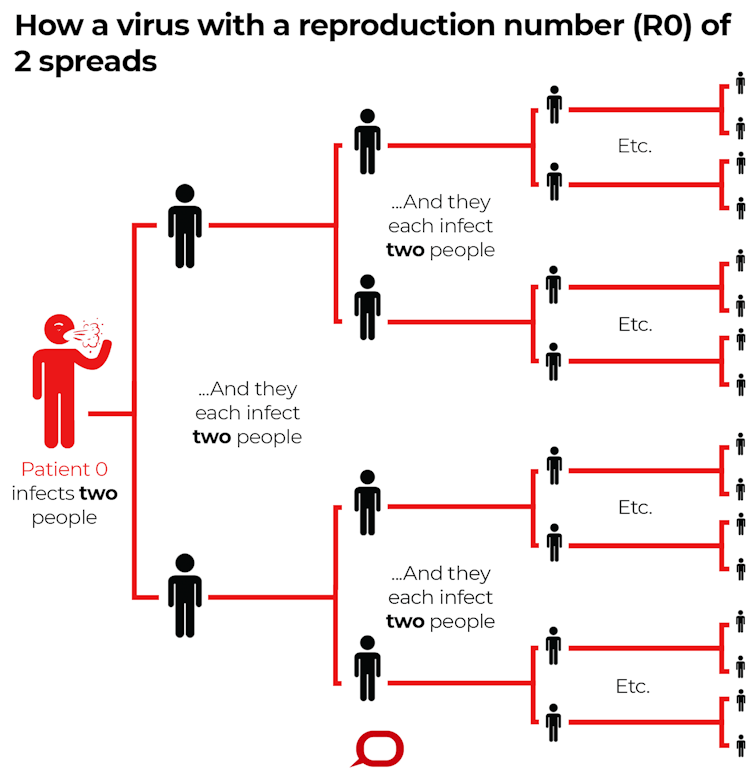
- basic reproduction number (R0) = o δείκτης αναπαραγωγής του ιού, χωρίς εξωγενείς παρεμβάσεις. Δλδ χωρίς μέτρα, αν τον αφήσεις να κάνει ότι θέλει.
- reproduction number (R) ή real-time reproduction number (Rt)= ο δείκτης αναπαραγωγής του ιού που έχει επιτευχθεί σε μία συγκεκριμένη χρονική στιγμή. Δηλαδή με μέτρα.
Estimating the number of infections and the impact of non-pharmaceutical interventions on COVID-19 in 11 European countries
https://www.imperial.ac.uk/media/imperi ... ort-13.pdf
Δεν έχετε τα απαραίτητα δικαιώματα για να δείτε τα συνημμένα αρχεία σε αυτήν τη δημοσίευση.
0 .
Hätt ich ne 2te Chance würd ich es genauso machen
Ich dreh mich nich um es geht nur darum wer du heute bist
Ich bin zufrieden, da scheint jemand auf mich aufzupassen
Ob es für Gott oder den Teufel is
Ich bereue nichts
Ich dreh mich nich um es geht nur darum wer du heute bist
Ich bin zufrieden, da scheint jemand auf mich aufzupassen
Ob es für Gott oder den Teufel is
Ich bereue nichts
-
Αρίστος
- Prediction Guru
- Δημοσιεύσεις: 22567
Re: Κορονοϊός COVID-19, πρόκληση ή ευκαιρία για το ανθρώπινο είδος;
Εγω μια περιεργεια.
Πως η ισπανικη κυβερνηση δεν εδωσε καθολου βαση στις αναλυσεις των ιατρικων οργανισμων που σπαμαρεις συνεχεια.
.gif "Laughing")
.
Πως η ισπανικη κυβερνηση δεν εδωσε καθολου βαση στις αναλυσεις των ιατρικων οργανισμων που σπαμαρεις συνεχεια.
.
0 .
Αναφερόμενος στη χαλάρωση της καραντίνας, ο Σόιμπλε δήλωσε ότι "δεν μπορούμε να εμπιστευθούμε την απόφαση αποκλειστικά στους επιδημιολόγους, αλλά πρέπει να σταθμίσουμε και τις σημαντικές οικονομικές, κοινωνικές, ψυχολογικές ή άλλες επιπτώσεις".
.
.
-
Προέλλην
- Right to Repair Champion
- Δημοσιεύσεις: 20804
Re: Κορονοϊός COVID-19, πρόκληση ή ευκαιρία για το ανθρώπινο είδος;
Αρίστος έγραψε:Εγω μια περιεργεια.
Πως η ισπανικη κυβερνηση δεν εδωσε καθολου βαση στις αναλυσεις των ιατρικων οργανισμων που σπαμαρεις συνεχεια.
.
Α μπα, και γιατί έκανε lockdown για να ρίξει το Rt; (ακριβώς όπως αναλύεται παραπάνω)
Δεν είναι τίποτε, είναι που πέρα απο απλοϊκές ατάκες, το μυαλό σου δεν είναι για παραπάνω.
0 .
Hätt ich ne 2te Chance würd ich es genauso machen
Ich dreh mich nich um es geht nur darum wer du heute bist
Ich bin zufrieden, da scheint jemand auf mich aufzupassen
Ob es für Gott oder den Teufel is
Ich bereue nichts
Ich dreh mich nich um es geht nur darum wer du heute bist
Ich bin zufrieden, da scheint jemand auf mich aufzupassen
Ob es für Gott oder den Teufel is
Ich bereue nichts
-
Αρίστος
- Prediction Guru
- Δημοσιεύσεις: 22567
Re: Κορονοϊός COVID-19, πρόκληση ή ευκαιρία για το ανθρώπινο είδος;
Προέλλην έγραψε:Αρίστος έγραψε:Εγω μια περιεργεια.
Πως η ισπανικη κυβερνηση δεν εδωσε καθολου βαση στις αναλυσεις των ιατρικων οργανισμων που σπαμαρεις συνεχεια.
.
Α μπα, και γιατί έκανε lockdown για να ρίξει το Rt; (ακριβώς όπως αναλύεται παραπάνω)
Δεν είναι τίποτε, είναι που πέρα απο απλοϊκές ατάκες, το μυαλό σου δεν είναι για παραπάνω.
Ναι ρε φιλε αλλα αυτοι χθες ειχαν 605 νεκρους και εσυ ηθελες καραντινα για μηνες παντου. Μην τα γυριζεις τωρα γιατι θα φας χοντροτερο χεσιμο.
.
0 .
Αναφερόμενος στη χαλάρωση της καραντίνας, ο Σόιμπλε δήλωσε ότι "δεν μπορούμε να εμπιστευθούμε την απόφαση αποκλειστικά στους επιδημιολόγους, αλλά πρέπει να σταθμίσουμε και τις σημαντικές οικονομικές, κοινωνικές, ψυχολογικές ή άλλες επιπτώσεις".
.
.
-
Προέλλην
- Right to Repair Champion
- Δημοσιεύσεις: 20804
Re: Κορονοϊός COVID-19, πρόκληση ή ευκαιρία για το ανθρώπινο είδος;
Αρίστος έγραψε:Προέλλην έγραψε:Α μπα, και γιατί έκανε lockdown για να ρίξει το Rt; (ακριβώς όπως αναλύεται παραπάνω)
Δεν είναι τίποτε, είναι που πέρα απο απλοϊκές ατάκες, το μυαλό σου δεν είναι για παραπάνω.
Ναι ρε φιλε αλλα αυτοι χθες ειχαν 605 νεκρους και εσυ ηθελες καραντινα για μηνες παντου. Μην τα γυριζεις τωρα γιατι θα φας χοντροτερο χεσιμο.
Ρε συ Αρίστο, εσένα χέζει η πραγματικότητα.
Αυτά έγραφα σελ 152 viewtopic.php?f=18&t=11636&start=1510
σε απάντηση της ροτέησον καθυστεριάς "η Ισπανία εγκαταλείπει το lockdown, ουου, δικαιώνομαι":
Προέλλην έγραψε:Ας δούμε όμως τι λέει το αμερικανικό Center for Disease Control and Prevention (CDC).
Έχει αναπτύξει το pandemic severity index (PSI) , το οποίο και καθορίζει τα μέτρα που θα πρέπει να λαμβάνονται (mitigation).The index focuses less on how likely a disease will spread worldwide – that is, become a pandemic – and more upon how severe the epidemic actually is. The main criterion used to measure pandemic severity will be case-fatality rate (CFR), the percentage of deaths out of the total reported cases of the disease.
Severity level is initially based on case-fatality ratio (CFR), a single criterion that will likely be known even early in a pandemic when small clusters and outbreaks are occurring, the report says. Other measures, such as excess mortality, could be factored in later. Two events would prompt the CDC director to designate a pandemic category: the World Health Organization (WHO) declaring a phase 6 pandemic level and the US government declaring a stage 3, 4, or 5 alert.
The pandemic severity index levels are:
Category 1, CFR of less than 0.1%
Category 2, CFR 0.1% to 0.5%
Category 3, CFR 0.5% to 1%
Category 4, CFR 1% to 2%
Category 5, CFR 2% or higher
https://en.wikipedia.org/wiki/Pandemic_severity_index
https://www.cidrap.umn.edu/news-perspec ... e-severity
Αυτός ακριβώς είναι ο ρόλος του CFR, και φυσικά σύμφωνα με τους ορισμούς, η σημερινή πανδημία, με CFR πάνω απο 2% (το optimum σενάριο της Γερμανίας), είναι ανησυχητική.
Όταν πια θα έχουμε ικανές serology studies, θα έχουμε και ΙFR, το οποίο απ ότι όλα δείχνουν θα είναι εκεί γύρω στο 0.5%, δλδ και πάλι η πανδημία θα εμπίπτει στην κατηγορία του συμαντικού γεγονότος, το οποίο θα απαιτεί μέτρα.
Όπου έχει επιτευχθεί reproduction number (R) κάτω του 1, τα σκληρά μέτρα αίρονται, αλλά και πάλι θα υπάρχουν μέτρα, γιατί ο ιός εμπίπτει σε επικίνδυνη κατηγορία. Όπου το R θα ξανανεβαίνει, θα αυξάνονται και τα μέτρα.
Ένα κι ένα κάνουν δύο.
Σημείωση:
- basic reproduction number (R0) = o δείκτης αναπαραγωγής του ιού, χωρίς εξωγενείς παρεμβάσεις. Δλδ χωρίς μέτρα, αν τον αφήσεις να κάνει ότι θέλει.
- reproduction number (R) ή real-time reproduction number (Rt)= ο δείκτης αναπαραγωγής του ιού που έχει επιτευχθεί σε μία συγκεκριμένη χρονική στιγμή. Δηλαδή με μέτρα.
Αυτά γράφει η πρόσφατη μελέτη για την επίδραση του lockdown σε 11 ευρωπαϊκές χώρες, μεταξύ αυτών και η Ισπανία:
Η Ισπανία προέβει σε lockdown ο ρυθμός αναπαραγωγής του ιού Rt είχε ψεσαλώσει, το lockdown ήταν η μοναδική μέθοδος να ρίξει το Rt, τώρα που έπεσε χαλαρώνουν τα μέτρα. Αν ξανανεβεί, ξανά lockdown.
Η ισπανική κυβέρνηση ακολουθεί επακριβώς τις αναλύσεις και οδηγίες της επιδημιολογίας. Εσύ απλά δεν καταλαβαίνει τι παρατίθεται στο νήμα και συνεχίζεις τις αυτιστικές ροτέησον ατάκες.
Δεν έχετε τα απαραίτητα δικαιώματα για να δείτε τα συνημμένα αρχεία σε αυτήν τη δημοσίευση.
0 .
Hätt ich ne 2te Chance würd ich es genauso machen
Ich dreh mich nich um es geht nur darum wer du heute bist
Ich bin zufrieden, da scheint jemand auf mich aufzupassen
Ob es für Gott oder den Teufel is
Ich bereue nichts
Ich dreh mich nich um es geht nur darum wer du heute bist
Ich bin zufrieden, da scheint jemand auf mich aufzupassen
Ob es für Gott oder den Teufel is
Ich bereue nichts
-
Αρίστος
- Prediction Guru
- Δημοσιεύσεις: 22567
Re: Κορονοϊός COVID-19, πρόκληση ή ευκαιρία για το ανθρώπινο είδος;
Απλα κανεις κωλοτουμπα γιατι το μαρκουτσι με την Ισπανια σου μπηκε μεχρι τον οισοφαγο.
Αν δεν σου κανει κοπο βρες μας τις δημοσιευσεις σου που ηθελες σκληρη καραντινα για μηνες ακομη.
.
Αν δεν σου κανει κοπο βρες μας τις δημοσιευσεις σου που ηθελες σκληρη καραντινα για μηνες ακομη.
.
0 .
Αναφερόμενος στη χαλάρωση της καραντίνας, ο Σόιμπλε δήλωσε ότι "δεν μπορούμε να εμπιστευθούμε την απόφαση αποκλειστικά στους επιδημιολόγους, αλλά πρέπει να σταθμίσουμε και τις σημαντικές οικονομικές, κοινωνικές, ψυχολογικές ή άλλες επιπτώσεις".
.
.