

Weapons performance and failures
Russia’s high-tech offensive capabilities have also demonstrated lacklustre performance.
The initial stages of the invasion included a strategic bombardment of Ukrainian targets using cruise missiles and Iskander short-range ballistic missiles.
Reports indicate that as of March 1, Russia had fired as many as 320 missiles, the majority being Iskander short-range ballistic missiles – making this the largest and most intense short-range ballistic missile bombardment between two states.
The Iskander is estimated to have a range of 500km and an accuracy of 2-5 metres. Prior to the invasion, it was expected to be an effective and devastating weapon system. Intriguingly, its performance has been lacking.
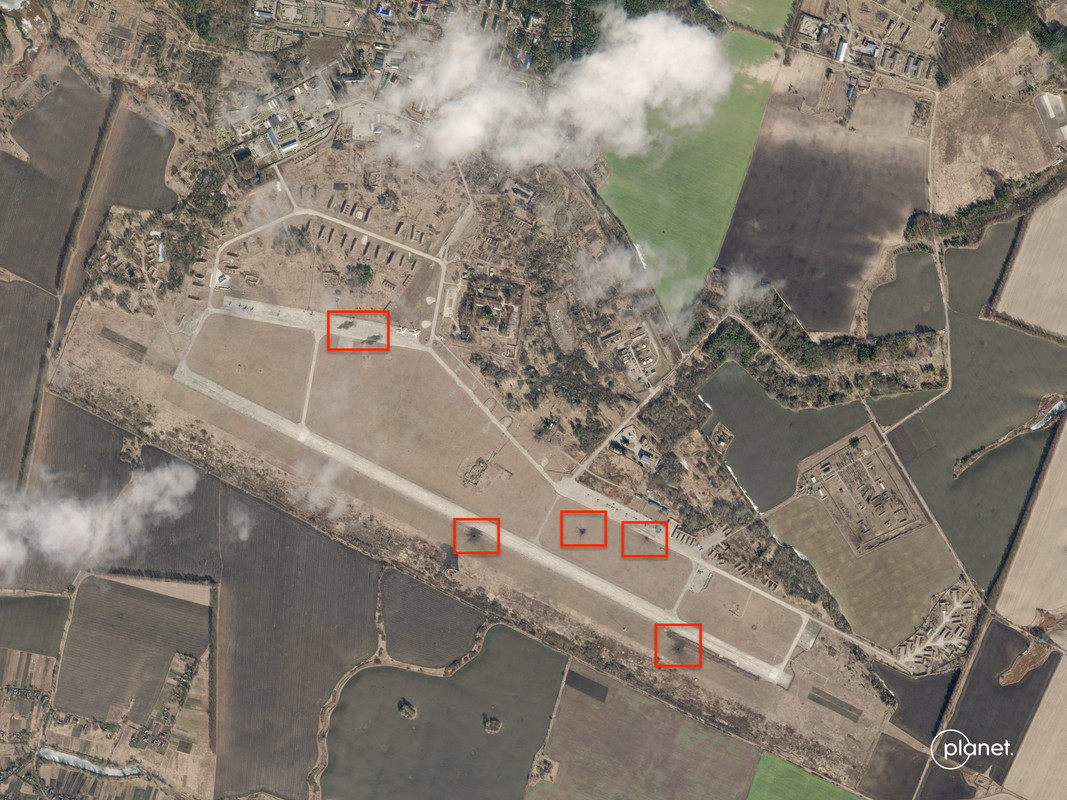
For example, Iskanders were used to attack Ukrainian air bases, to destroy runways and prevent Ukraine’s air force from operating effectively. But as can be seen below, the previously vaunted accuracy of the Iskander appears far less impressive than what was anticipated.
As the conflict has progressed, Russia has made more frequent use of lower-tech weapons systems, such as unguided “dumb” bombs and cluster munitions. This might indicate Russia has either expended its limited number of high-tech weaponry, or is holding back reserves in case the conflict escalates.
The Ukrainian air force remains in the fight, despite all odds. Russia will no doubt learn from its issues and attempt to correct. Unfortunately, it does still have the advantage with numbers, in terms of both troops and equipment.
However, it’s likely the conflict can’t be sustained for long on Russia’s part, particularly with the impact sanctions are having on the Russian economy. For Ukraine, the delays caused by Russia’s errors may well lead to better outcomes.
https://theconversation.com/3-ways-russ ... ine-178895
Υπερόπλα απο τα Lidl


.gif "Laughing") Έξυπνο αλλα οχι.
Έξυπνο αλλα οχι.
 ) ειτε τα οπλα τους ειναι χαλια και δεν κανουν δουλεια