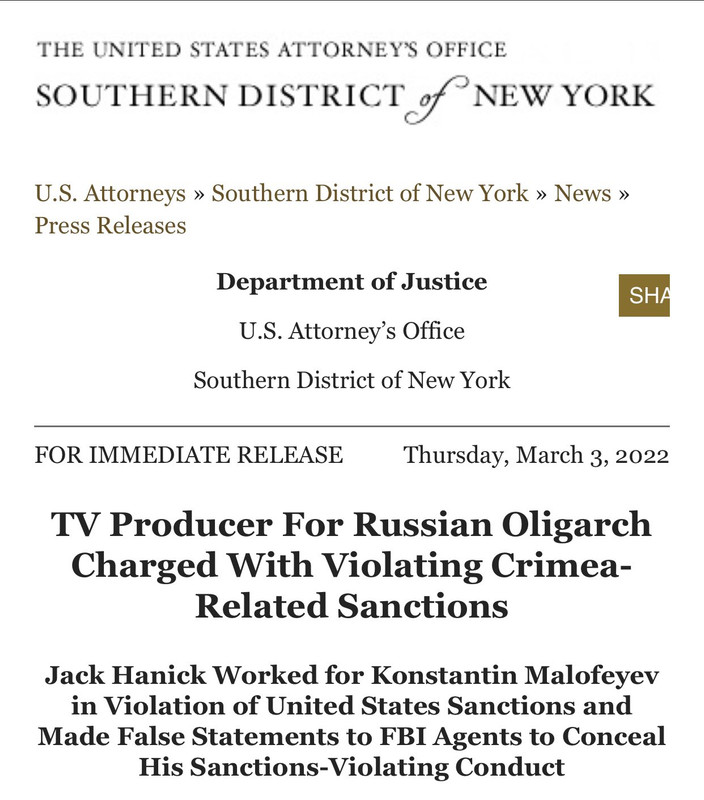
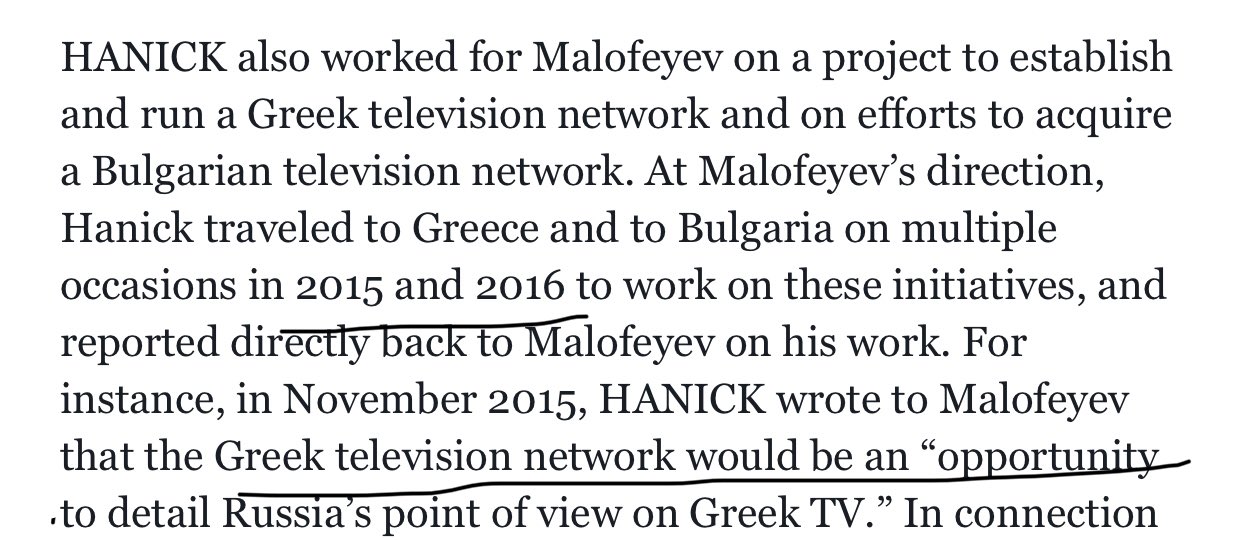
https://www.justice.gov/usao-sdny/pr/tv ... -sanctions
Kαλημέρα πρακτοράκια


nik_killthemall έγραψε:Απλά ενα μικρο δείγμα :
Ο φοβερη νικη του γιανουκοβιτς που ηταν αδυνατον να αμφισβητηθει ήταν :
35% εναντι 25% της 2ης τιμοσενκο στον πρωτο γυρο και
49% εναντι 45,5% της τιμοσενκο στον δευτερο γυρο
Απλα για συγκριση ο ζελενσκι το 2019 ειχε :
30% εναντι 16% του 2ου στον πρωτο γυρο και
73% εναντι 24,5% στον 2ο γυρο
σε τι υποληψη εχουν οι Ουκρανοι τους φιλοδυτικους ...
Τελος ΔΕΝ ηταν προεκλογικη δεσμευση του Γιανουκοβιτς προς τον Ουκρανικο λαο η απορριψη της συμφωνιας συνδεσης Ουκρανιας - Ευρωπης, αλλα το ακριβως αντιστρφο ! Μεχρι τη τελευταια στιγμη παραμυθιαζε τον κοσμο πως θελει την συμφωνια :Ο στόχος μια συμφωνίας εμπορικής σύνδεσης της Ουκρανίας με την Ευρωπαϊκή Ένωση παραμένει, δήλωσε την Παρασκευή ο ουκρανός πρόεδρος Βίκτορ Γιανουκόβιτς, ζητώντας ωστόσο από τους «28» αποφασιστικά βήματα για ένα πακέτο οικονομικής βοήθειας προς τη χώρα του.
κατά κανόνα άρθρα που ξεκιναν με όλη η αλήθεια για στη πραγματικοτητα ενοουν ολο το παραμυθι για
Ραν ταν πλαν έγραψε:nemo έγραψε:και αυτο
Χαλάρωσε ρε παπάρα.
Διαπιστώνω παρακολουθώντας σε (έστω και επιφανειακά) ότι έχεις πάρει το ουκρανικό επί προσωπικού.
Δες το αποστασιοποιημένα το πράμα γιατί αυτή η ολοσχερής σου ταύτιση θα έχει δυσμενείς επιπτώσεις στον ψυχισμό σου.
Πάρε κάβο από εμάς τους υπόλοιπους και τη χαλαρότητα που χαρακτηρίζει τις αντικειμενικότατες αναλυσάρες μας και δείξε τη σχετική εκφραστική αυτοσυγκράτηση γιατί η ανοιχτή φιλορωσική σου στάση αγγίζει τα όρια της παρεξηγήσεως.


Προέλλην έγραψε:
Kαλημέρα πρακτοράκια
RUSSIAN INFLUENCE IN EU POLITICS
Submitted by christian on Thu, 12/31/2015 - 11:01
Russian influence in the Member States’ parliaments, media and business as well as at the European Parliament is significant. Russia has found allies in Europe’s far-right (in some cases arguably far-left) parties, which fiercely oppose pan-nationalistic tendencies such as the EU and NATO. These parties are vocal supporters of Russia’s political system and claim that alliance with Russia would help them gain independence from the economic and political clutches of the European Union. Russia supports these parties because they can lobby for its interests in the European Parliament, thus weakening or stopping any action that aims to sanction Russia or to affect it negatively. The pro-Russian parties have spread throughout Europe, they can be found in Central-Eastern Europe as well as the western parts of the continent. According to a research done by the Hungary based Political Capital Policy Research and Consulting Institute, there are strongly pro-Russian parties in 15 EU Member States. These are:
Austria: The Freiheitliche Partei Österreichs (Freedom Party Austria, FPÖ) with 4 seats in the European Parliament.
Belgium: The Flemish nationalist Vlaams Belang (VB) party supports Russian interests with 1 seat in the European Parliament.
Bulgaria: The Bulgarian Ataka (Attack) party is known to endorse Russia. When Bulgarians were asked in a survey whether they would chose EU membership or be a part of Russia’s Eurasian Union, 22% of the respondents preferred the latter option. The strongest supporters of Russia according the survey are the supporters of Ataka. Ataka currently holds no seats in the European Parliament.
Czech Republic: The Czech Republic the Worker’s Party of Social Justice (DSSS) endorses closer ties with Russia. DSSS has no representative either in the Czech Republic or in the European Parliament.
France: Front National, while against the European Union in its current form, strongly advocates a union of nation states, where each nation can self-govern. FN would like to include Russia in this union as well – what fits perfectly into Russia’s Eurasian Union endeavours. The French nationalist party also wants to see a strong Paris, Berlin, Moscow trilateral cooperation. Among many far-right parties, FN bases its eagerness to cooperate with Russia on the grudge they hold against the European union, namely the pan-national policies. FN also sent an observer to the Crimean referendum. FN has 24 seats in the European Parliament.
Germany: The Nationaldemokratische Partei Deutschlands (National Democratic Party of Germany, NPD) seeks closer ties with France and Russia in a trilateral agreement and it encourages cooperation with Russia and China, advocating a Eurasian scope of interests rather than close alliance with the United States of America. NDP currently has 1 Member in the European Parliament.
Die Linke (The Left) also advocates closer ties with Russia. They called for a new military cooperation involving Russia to replace NATO. The party also opposes sanctions against Russia and supported the Crimean referendum. Die Linke has 7 seats in the European Parliament.
Greece: The Popular Association – Golden Dawn (Λαϊκός Σύνδεσμος – Χρυσή Αυγή, XA) is a strongly pro-Russian party. It claims that Greek interests coincide with that of Russia, which thus is a natural ally.XA has 3 seats in the European Parliament.
Hungary: Jobbik has exhibited strong pro-Russian affiliations. There is ample evidence, that Jobbik has strong relations with Russia and advocates its interests. The party supports closer cooperation with Russia, which they see as a potential partner instead of the European Union. Jobbik also asked Russian officials whether an EU member state can start negotiations to be a member of the Eurasian Union. Jobbik is growing out to be the second most popular party in Hungary with 3 seats in the European Parliament.
The most popular party, Fidesz, which is the governing political force in Hungary, has close ties with Russia as well. Because of this, Fidesz is loosing friends in the EU, on whom it depends, and is thus turning towards Russia. Under the government of Fidesz Hungary made a pact with Russia to secure loans for new Hungarian nuclear power plants, a deal which indebted Hungary severely. Another proof of the tightening relations is Hungarian Prime Minister Victor Orbán’s speech in which he condemned liberal democracies and declared to bring on an illiberal state in Hungary, modeled on the Russian system. Fidesz is the biggest party in Hungary – it formed the government and holds 12 seats in the European Parliament.
Italy: Lega Nord (Northern League, NL) has close relations with Russia which they see as the protector of family values. Northern League has 5 seats in the European Parliament.
Forza Nouva (New Force, FN) admires Russia, thinking that its model is the one to follow. The party is not represented in the European Parliament.
Lithuania: Tvarka ir Teisingumas (Order and Justice, TT) is a pro-Russian party.TT has 2 seats in the European Parliament.
Poland: Samoobrona Rzeczpospolitej Polskiej (Self-Defence of the Republic of Poland, SRP) wants closer ties with Russia. The party claims that Russia is a natural ally, a thought upon which they are trying to act. The party is against closer ties with the United States and would prefer their eastern neighbour instead. Throughout the Ukrainian crisis SRP backed Russian interests.The party’s popularity has declined and currently they have no seats in the European Parliament.
Slovakia : The Slovenská Národná Strana (Slovak National Party, SNS) pro-Russian activities are apparent, although the party is not that popular at the moment, others have taken the position to be vocally supporting Russian interests.SNS holds no seats in the European Parliament.
The Ľudová Strana Naše Slovensko (People’s Party Our Slovakia, LSNS) is Euroskeptic and strongly against NATO and a pro-Russian party. It has no seats in the European Parliament.
United Kingdom: The British National Party (BNP) supports Russian interests. BNP has supported Crimea’s referendum taking Russia’s side and also criticized the sanctions against Russia. BNP has no seats in the European Parliament.
Spain: In Spain there is one party which might have ties with Russia, although no conclusive research has been done. It is an undeniable fact however that the Platform for Catalonia (Plataforma per Catalunya), a Spanish far-right party has also sent observers to the Crimean referendum on Russia’s invitation.
Parties open to Russian influence and neutrals
In some European countries far-right parties have either a neutral stance on Russia or are open to cooperation. These are: HSP (Croatia) and EIP (Estonia) – which are neutral, and DF (Denmark), PVV (Netherlands), LPR (Poland) and SD (Sweden) – which are probably open to cooperation.
Far-left Euroskeptic countries
Of course there are far-left parties that support Russian interests as well . The Communist Party of Greece, for example, is a far-left party which also sent an observer to the Crimean Referendum.
Conclusion
Russia continues to bolster efforts to spread influence across the 28-nation-European Union through various political, economic and media means.
Many parties in the European Union show – at least to some extent – pro-Russian tendencies, and are proactively supporting Russian interests. The last European Parliamentary elections have shown a rise in the popularity of Euroskeptic extremist parties, so Russia’s fraction in the European Parliament got stronger. All over Europe, and particularly in central and southern Europe, the Kremlin has been making inroads. Russia is also actively projecting its influences in the Balkans, particularly in Serbia and Bosnia.
The Russian system of social formation of public opinion is represented by the “ Russian Public Opinion Research Center (VCIOM)”, and also by the research agency “Eurasian Monitor”, sociological service , “Public Opinion Foundation”, analytical center “Levada Center” and other entities. These structures form the basis for modeling the necessary opinion of the audience through the results of social research. Activities of these Russian entities forming public opinion are repeatedly spotted also abroad, in the publication of their research results in the local media.
The social and national foreign influence is implemented mainly through the “Federal Agency of the Commonwealth of Independent States” and “Rossotrudnichestvo “(compatriots living abroad). Its regional offices operate in 80 countries. The Rossotrudnichestvo is a division of the Russian Foreign Ministry. In addition, the formation of public, political and business climate abroad is implemented by the institutions of civil society. This is realized through activities of governmental foundations operating as public organizations. The task of these governmental foundations is to familiarize the foreign audience with the Russian culture, history and politics. The main ones are:
NGO “Russkiy Mir” (Russian World) foundation popularizes the Russian history, language and culture in different countries of the world. The founders of the Foundation (on behalf of the Russian Federation) are the Ministry of Foreign Affairs and the Ministry of Education and Science of the RF. The activities of the NGO are extended to all countries of Europe and the CIS.
NGO “Alexander Gorchakov Public Diplomacy Fund” aims to improve Russia’s foreign policy image. The Foundation has been established by the Russian Ministry of Foreign Affairs. The organization supports the media and electronic information resources of foreign countries, providing financial, methodological and organizational support to foreign domestic organizations.
Non-profit organization “ Russian Council of Foreign Affairs” on foreign policy and international relations. It has been established by the RF’s Ministry of Foreign Affairs and the Ministry of Education and Science, the Russian Academy of Sciences, the Russian Union of Industrialists and Entrepreneurs and the news agency “Interfax”. This is one of Russia’s tools of public diplomacy and „soft power” in Europe and the world. The main task of the Council is to test the social climate of the elite and people and form the necessary opinion in the interest of Russia’s policy.
NGO “ Historical Perspective Foundation”, was established to finance the European (Paris) and the US (New York) branches of the Institute of Democracy and Cooperation. The Institute’s activities are focused to propagate Russian ideologies and assist the RF in conducting its foreign policy in matters of international relations, geopolitics, history and media.
It is estimated that Moscow’s annual cost of social and national foreign influence activities is approximately 390.3 million USD.
https://www.aalep.eu/russian-influence-eu-politics

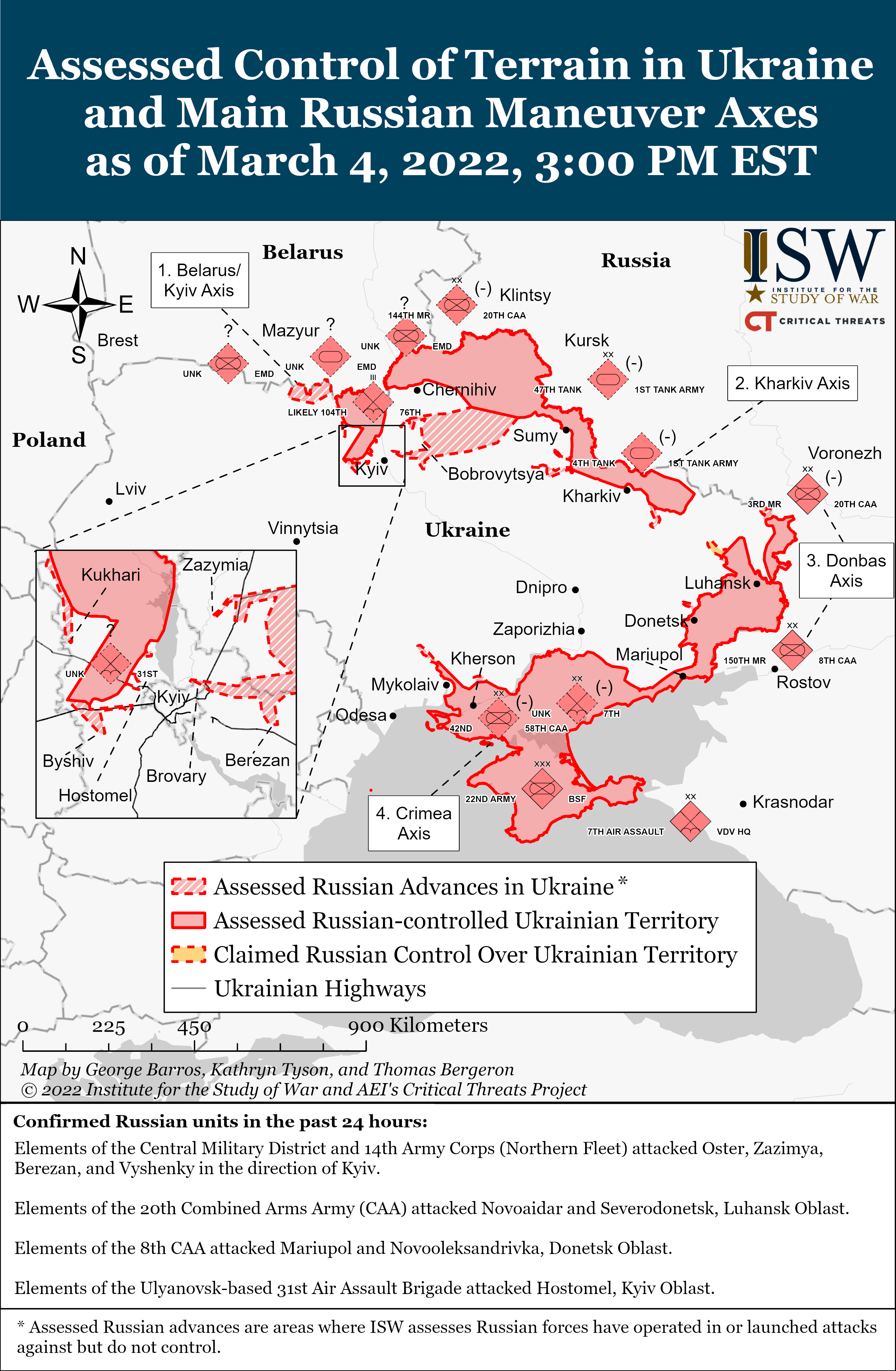
March 4, 3:00 pm EST
Russian forces continue their focus on encircling Kyiv. The western envelopment remains bogged down but Russian troops have moved more rapidly from the east and are arriving in the capital’s outskirts on the Sumy axis. The speed of the advance from the east is likely to slow as Russian forces leave sparsely-inhabited and flat terrain and enter the more congested and built-up eastern suburbs. Russian mechanized forces around Kharkiv appear to be supporting operations toward the east and west of the city, likely weakening their ability to encircle or seize it.
The Russian military has concentrated considerable combat power around Mariupol to encircle and ultimately seize or destroy it. The purpose of this effort is not entirely clear. The capture or destruction of Mariupol will not likely materially affect the outcome of the war, whose decisive operations are more than 600 kilometers northwest around Kyiv. Russian forces have also renewed their ground offensive west from Crimea toward Odesa, currently focusing on advancing from Kherson to Mykolayiv, and seized the Zaporizhya Nuclear Power Plant north of Crimea. The continued pursuit of objectives along three diverging axes by the same group of forces in Crimea has hindered the Russian military’s ability to generate decisive effects on any of the three.

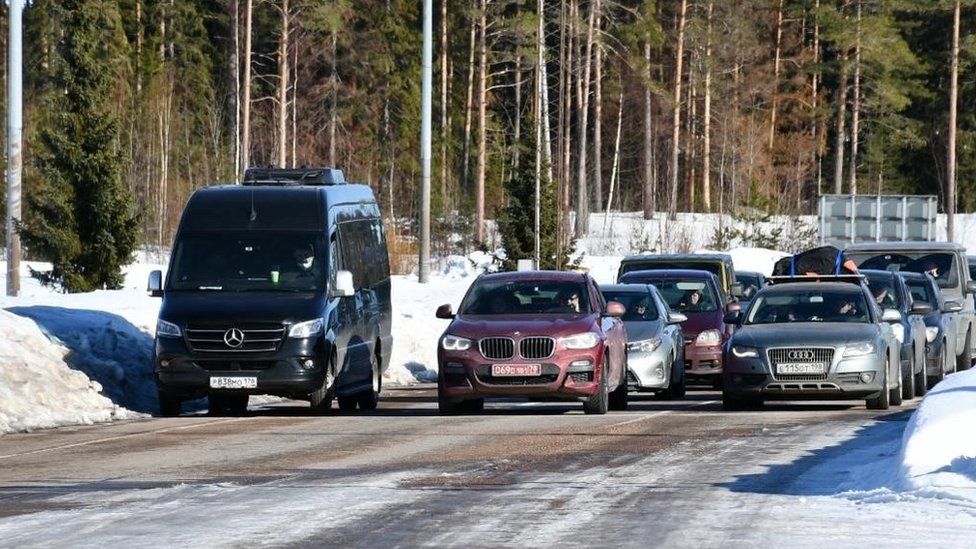
The Russians leaving Russia for Finland
At Vaalimaa, Finland's border crossing with Russia - 120 miles east of Helsinki - buses and cars stop for passport and customs checks. These aren't Ukrainians, they're Russians, and although the flow isn't heavy, it is constant.
Some people are anxious to get out of Russia because there has been a persistent rumour that President Vladimir Putin's government might soon introduce martial law to deal with demonstrations against the invasion of Ukraine.
With flights to Europe halted, the only way out of the country is by car - crossing this border - or by train.
We spoke to one young Russian woman who was leaving for the West - one of the lucky ones who had an EU visa before the sanctions were announced. She was in despair at what has been happening.
"People in Ukraine are our people - our family," she said. "We shouldn't be killing them." Would she think of going back, I asked? "Not while our dreadful government is there. It is so, so sad."
She said most Russians don't want this war, but they risk going to jail if they try to stand up to Putin.
In Finland, there's immense sympathy for people like her - just as there is for Ukraine and its inhabitants. This sympathy, and the fear that Russia might lash out at other neighbours such as Finland itself, is changing attitudes to Finland's traditional leanings toward neutrality.
According to the latest opinion polls, a growing majority of Finns believe that it's time for their country to join Nato and access the protection that membership of the alliance would bring.
Back in Helsinki, the train from St Petersburg is pulling in, carrying hundreds more people anxious to flee Russia. Most trains are fully booked, with ticket prices soaring.
The amount of money passengers leaving Russia can bring is limited. The rouble is in a state of collapse; the Russian economy is threatened by sanctions and the withdrawal of many large Western companies. Russia's government is desperate to avoid a run on the banks.
Will sanctions against wealthy Russians cause them to turn on President Putin? It's certainly not impossible, but it's unlikely to force him to stop the war on Ukraine.
More worrying for him is the call by the Russian oil giant Lukoil for a halt to the invasion. If the main elements of the Russian economy are turning against him, he will find it much harder to carry on without making big changes - such as the introduction of martial law.
Another woman who has left Russia, this time for Istanbul, told us by phone she had been terrified of a return to life as it was under the Soviet Union.
"I'm 30, I haven't seen the worst... the repressions, the secret police," she said. "I had a very clear fear that if I'm not going to fly out right now, I will not be able to fly out ever."
"On the one hand, it seems this is the moment to get out. On the other, there is a legitimate fear that you will not be able to see your friends and family for God knows how long, if ever."
If martial law were introduced, Mr Putin would be free to do what he wanted, without having to worry about damaging protests in the streets. He has already made it clear to French President Emmanuel Macron that he won't stop until he has occupied the whole of Ukraine - and a French official who listened in on their phone call said, afterwards, that things could get a great deal worse.
How? Well, the nuclear option could be getting decidedly closer. It's a frightening prospect.
No wonder Russians who don't want any part of the invasion or the trouble it's creating inside Russian towns and cities are desperate to get out of the country - and make a living for themselves outside.
https://www.bbc.com/news/world-60624500