https://twitter.com/i/status/1577626524534116354

ΨΟΦΟΣ στα φασιστοπουστινάκια


Mobilization Can’t Save Russia’s War
Russian troops are being trained to be cannon fodder.
October 4, 2022, 12:52 PM
Six months after Russian President Vladimir Putin pledged that his “special military operation” to eradicate the Ukrainian nation wouldn’t require a general mobilization of Russia’s men, the flagging leader has doubled back on his word, sparking outrage across Russia. Declaring that 300,000 “reservists”—nominally those with previous military service—would be mobilized, the deadly combination of unrest at home and an ever more limited military apparatus facing down an increasingly better-armed Ukrainian army means that even if Moscow can meet its recruitment goals, Putin’s mobilization is doomed to fail.
Momentum continues to be on Ukraine’s side. Its armed forces are doubling down on their successful offensive in the east, and the United States announced a new tranche of long-term military support, including more than doubling Ukraine’s stock of HIMARS—the devastating artillery rocket system that was crucial to Ukraine being able to take the fight to more occupied territories. The Ukrainian public has retained, and even strengthened, its remarkable resolve to win outright.
Russia’s outlook, on the other hand, is increasingly grim. Putin’s mobilization of just about anybody caught in the military’s dragnet, combined with viral reports of minimal training, has created a panic among Russians.
Sending untrained, underequipped, and largely unwilling men to fight in Ukraine will be a slaughter with little precedent in modern war fighting, and the more than 260,000 Russian men who have fled the country since Putin’s announcement know it.
Those unlucky enough to be conscripted have few qualms about sharing their abysmal conditions on social media. Online posts show a variety of rusty Kalashnikov rifles being distributed as well as bolt-action Mosin-Nagant rifles that were already defunct a century ago. Officers declare to bewildered new troops that they need to source their own supplies, such as sleeping bags, and that they should ask their girlfriends to send tampons because there aren’t enough medical supplies to go around.
In the United States, new Army recruits need 10 weeks of basic training, at a bare minimum, to be ready for combat. Russia’s haphazard mobilization is sending men to fight with a week or two if they’re lucky—some have been sent with no preparation at all.
“It is criminal to send untrained soldiers into combat. … It’s murder,” retired Lt. Gen. Ben Hodges, who led U.S. Army forces in Europe, told the Moscow Times. “I doubt these men will survive very long.”
The tens of thousands of Russian troops already killed in Ukraine were largely contract soldiers and mercenaries. Despite well-documented equipment and morale issues, these men had at least some level of preparation for fighting a war, in sharp comparison to the young, old, and sometimes sick recruits being sent to die now.
In stark contrast, Ukraine’s military has spent the last eight years reshaping itself from the kind of decrepit Soviet-style force that Russia still has into a modern, Western-style military with an emphasis on professionalization.
As Russia is rushing to throw as many men into the fight as possible, some Ukrainian units have actually been trimming the fat from their forces. One unit defending the village of Dementiivka on the road to the Russian border city of Belgorod has started turning away many of the new applicants eager to join up, with Artem Ryzhykov, who runs the battalion’s Facebook page and fields these applications, rationalizing that “one good fighter is better than 10 useless guys.” In July, Ryzhykov was tasked with cutting 10 percent of the unit’s fighters to better professionalize the battalion.
“We fired all of the crazy and unreliable soldiers and assembled a team of only professional fighters,” Ryzhykov said. “The quality of warriors is much better.”
Ukraine is also making long-term investments in its fighting force, sending both its seasoned soldiers and eager recruits abroad to receive training from Western militaries. The United Kingdom recently began a joint training program designed to train 10,000 Ukrainian soldiers, bringing them together with instructors from the British Army and five other allied militaries.
Ukraine’s output from programs like these is on a smaller scale than Putin’s stated goal of 300,000 mobilized soldiers, but Kyiv isn’t aiming for volume. Ukraine is not suffering from a lack of willing volunteers, as those turned away from recruitment centers show; it’s betting that a highly professional force using some of the best equipment in the world, combined with continued assistance and intelligence from Western partners, can win out over Russia’s untrained masses.
While Ukraine is receiving a steady supply of advanced heavy weapons from the West, it isn’t receiving everything it says it needs. The United States has long been resistant to giving Ukraine long-range ATACMS munitions, which would nearly triple the range of the rocket launchers that Washington has supplied. Ukraine has also asked for modern fighter jets and Western tanks, the latter of which is currently being hotly debated in Germany as Chancellor Olaf Scholz’s coalition is ramping up pressure for a change in German policy to finally deliver Leopard tanks and Marder infantry fighting vehicles.
The delivery of these weapons would dramatically aid Ukraine in the defense of its skies and its ability to conduct combined arms offensives to liberate occupied territory, as it did in the Kharkiv region. The reluctance of Washington, Berlin, and other Western capitals to supply these weapons does not doom Ukraine, but it does place unnecessary limits on Kyiv’s capabilities at a time when Russia’s weakened forces are trying to regroup.
There’s a reason Putin is relying on nuclear threats to try to return some fearsomeness to Russia’s diminished fighting force. But even here, Ukraine’s resolve shines through as officials in Kyiv simply acknowledge the possibility of their city being annihilated by a nuclear weapon, declaring that a strike would only change the costs of this war, not the outcome of an eventual Ukrainian victory.
Putin’s mobilization is happening because Russia is losing the war. Recent weeks have seen the Kremlin rolling out a variety of initiatives with the intention of either turning the tide, as with Putin’s mobilization, or trying to solidify existing gains, as with Russia’s faux referendums and annexation of partially occupied regions. But the occupied territories are squarely in Kyiv’s sights as Ukraine plans to use its expanding toolkit of Western weapons to conduct further offensives.
Ukrainians have asserted from the beginning that victory, meaning the liberation of all occupied territory, would be their endgame. Serious challenges remain, such as the fact that further offensives will be particularly difficult once winter sets in. But Ukraine’s leadership maintains that this war may be longer and bloodier than anyone wants to imagine—an outlook far less rosy than Putin’s belief that Ukraine could be conquered in a few days. But it’s an outlook more grounded in reality than the Kremlin’s belief that a haphazard mobilization of untrained and underequipped men can salvage its flagging war effort.
Committing to winning a war, whatever the cost, is not made overnight. Ukrainians spent years building the infrastructure required to defend their country, while Russia’s system for sourcing and training a fighting force wasted away like the expired rations given to its vanguard in Ukraine. Putin’s decision to mobilize his country was doomed before it began.
https://foreignpolicy.com/2022/10/04/mo ... raine-war/
Thousands of Russian soldiers calling ‘I Want To Live’ surrender hotline: Ukraine
A newly launched Ukrainian hotline offering Russian soldiers a chance to surrender — and stay alive — has been fielding thousands of calls from desperate draftees, according to Ukrainian officials.
Andriy Yusov, a representative of Ukraine’s Main Intelligence Directorate of the Ministry of Defense, said in a recent interview with Voice of America that thousands of enemy troops have reached out to the “I Want to Live” program via phone or online chat to give up their arms.
Yusov said the hotline has been receiving offers of surrender at a rate of hundreds a day from soldiers already fighting in Ukraine — including those recently mobilized as part of Vladimir Putin’s partial draft — but also from those who hadn’t even yet been called up, but expect to be in the near future.
“They are interested in how to safely surrender in Ukraine,” Yusov said.
It’s been reported the hotline so far has received more than 2,000 appeals from Russian soldiers and their families.
“It does not mean that everyone who calls and writes surrenders right away,” Yusov noted. “Many of them research the information for themselves or their relatives.”
Yusov said in some instances, wives call the hotline to inquire about securing surrenders for their husbands.
Yusov explained Ukraine is a democratic country that follows international laws and the Geneva Conventions, which means Russian soldiers who agree to lay down their arms are fed regularly, have access to medical care and allowed to contact their relatives.
“Most importantly, they get to live instead of being turned into cannon fodder in a war of Ruscists [supporters of the Russian administration] and Putin against Ukraine,” he said.
During Ukraine’s successful counter-offensive in the Kharkiv region last month, Yusov said, Russian troops were calling the hotline to capitulate. In one case, he recounted, a soldier surrendered along with the tank he was driving.
Reports of would-be draftees maiming themselves to avoid being sent to Ukraine have circulated since shortly after the February invasion along with claims that Russia’s army units are plagued by low morale, drunkenness and insubordination.
The Ukrainian intelligence official added that Russian prisoners of war who do not wish to be swapped for Ukrainian prisoners “won’t be sent back to Putin’s Russia against their will.”
It has not been decided yet, however, whether those troops who give up arms would be offered political asylum in Ukraine.
One Russian soldier was reported to have surrendered his tank to the Ukrainians for $10,000 and the promise of citizenship. Earlier in the campaign, similar schemes offering surrendering Russians cash and political pardons were reported, but it is unclear if they are still running.
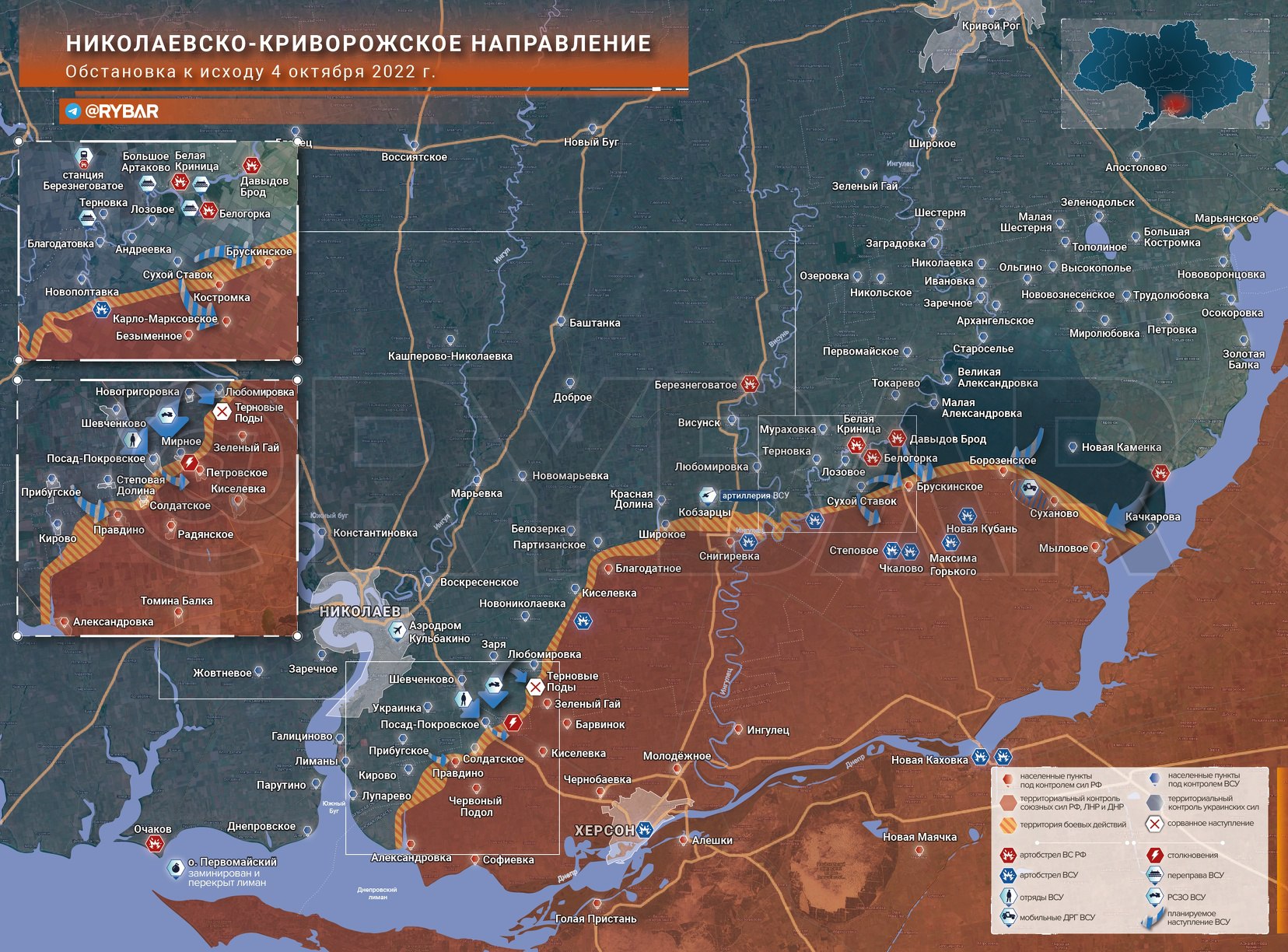
Russian troops have suffered embarrassing losses on battlefields in the Donetsk and Kherson regions in recent days, with Kyiv’s forces reclaiming large swaths of occupied territory and causing the enemy to retreat.
https://nypost.com/2022/10/05/russian-t ... surrender/


.gif "Laughing")
They are so desperate to get their population to buy into the bullshit, they are practically begging at this point
Give him a rifle if he is so patriotic. And the presenter - his gear is already better than a Russian soldiers
Go home Russia …you’re drunk plus you’re crying.

